The caves are open every day at 10:00am until Thursday 31st October 2024.
Today's Tours Start at 10:30, 12:30 and 14:30. Numbers on the tours will be limited and BOOKING IS ADVISABLE to avoid disappointment in quiet times, so please pre-book tours by ringing 01297 680 282. If very busy extra tours may be put on at 11:30, 13:30 or 15:30. The caves are cool – please wear something warm.
Tours are every hour on the half hour e.g. 10.30am, 11.30am.
During quiet times there are 3 tours a day 2 hours apart with the last tour at 2:30pm and during busy times there are 6 tours a day 1 hour apart with the last tour at 3:30pm. The first tour always starts at 10:30am.
2024 Prices
Adults £11.00 Child 5 to 16 years and over 66 years £9.00. Family 2 adults + 2 Children £35.00. Under 5’s FREE. We are not affiliated with the National Trust members discount scheme.
NEW FOR SUMMER 2022: Evening Bar-B-Que from 5pm to 8:00pm (Fri & Sat)
Food as below, but join us on FRIDAY & SATURDAY Evenings only from 5:00pm to 8:00pm for a BBQ and tours. The Bar will be open for these events. Booking is preferable, just phone 01297 680 282.
SUMMER 2023: Bar-B-Que from 12pm to 2:30pm
The Bar-B-Que will return in the summer of 2023 Fantastic choice of hot food from our Grill including Jacket Potatoes filled with Cheese, Tuna or both. 10″ Fresh baked baguettes with 2 x Jumbo Pork Sausages with or without cheese. Delicious 8oz Prime Burger in a bun with or without Cheese. Special offer on many days of anything from the hot plate with an alcoholic drink.
The Tours
BOOKING IS PREFERRED – Please Pre-book tours by ringing 01297 680 282 to avoid disappointment as tour times can change due to visitor numbers.
Disabled customers are welcome, however due to the nature of the site disabled access is limited so please call to discuss your needs. Regrettably we do not offer a disability discount or a carers allowance.
Group bookings are welcome and often discounted for higher numbers, please call and ask for Steve for information regarding group booking.
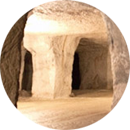
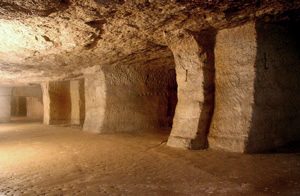
Our guides will take you on an hour long tour through the vast man-made complex of underground caverns with their mighty halls of vaulted roofs and pillars of Beer Stone which have been likened to a vast underground cathedral. See for yourself the methods used to quarry and deliver the huge blocks of stone, the working conditions, the hardships endured and the dangers faced daily by the work-force using only the light from a flickering tallow candle and you may never again see a famous building with the same eyes. The caves are cool so please bring warm clothing and it’s best to arrive at least 10 mins before the tours start.
Many of us marvel at the intricacy of stonemasons' work on numerous stately buildings, cathedrals and churches. But do we ever stop to consider where the stone came from and the history of the excavation behind it?
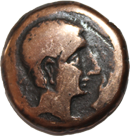
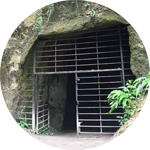
This vast man-made complex of underground caverns was created by centuries of quarrying the famous Beer Stone. The underground quarry, first worked by the Romans, supplied stone for 24 cathedrals including Exeter and St.Paul's, parts of Westminster Abbey,the Tower of London, Hampton Court and Windsor Castle.
Quarried by hand, a small block weighing 4 tons, the stone was carted on horse-drawn wagons and by barges from Beer beach to its destination, sometimes involving journeys of several hundreds of miles.
The quarry closed around 1920 as a new quarry opposite was opened. This closed in 2003, so there is no quarrying activity now.
Next Event - Music From The Caves 2 With Seaton Acapella & The Sea Gals Saturday 18th May 2024 3pm and 5.30pm
After a very successful concert in 2023, the group return for another stunning performance. Tickets £10 available from Seaton Print & design, Harbour Road, Seaton (cash only please) or from the caves Tel: 01297 680 282. To reserve your ticket please email seatonacapella@gmail.com Food and BBQ will be available, please book your BBQ by phoning the caves one week before the event. Any Profits will be donated to the RNLI.
Useful Quarry Facts
Onsite Car Parking is Free
The caves are cool please wear something warm
Please do NOT bring your own torch - the caves are well lit
Please ring regarding disabled access. The site is externally steep.
Well behaved dogs on leads are permitted underground.
One of the most important industrial sites in the British Isles. Beer Quarry Caves are owned by Clinton Devon Estates and leased to the Beer Quarry Caves Ltd.